Managing employees is about much more than hiring people and processing their salaries. HR teams handle employee records, attendance details, leave requests, onboarding documents, job information, and several other responsibilities every day. When all this information is scattered across spreadsheets, emails, and separate systems, even simple tasks can become time-consuming.
This is where Core HR software becomes useful. It helps businesses bring essential employee information and HR processes together in one place, making everyday HR management more organised and efficient.
But what exactly is Core HR software, which features should businesses look for, and how can they choose the right solution? Let's explore.
What Is Core HR Software?
Core HR software is a digital system that helps businesses manage essential employee information and routine human resource activities from a central platform.
Instead of maintaining employee details in multiple spreadsheets or physical files, HR teams can store and access relevant information through one system. This may include employee profiles, contact details, job roles, department information, employment documents, reporting structures, and other important records.
Depending on the platform, Core HR software may also connect with attendance management, leave management, onboarding, payroll, and employee self-service tools.
For example, when an employee changes departments, the HR team may need to update their designation, reporting manager, and organisational details. With a centralised system, these changes can be recorded in one place instead of updating several disconnected files.
The main purpose of Core HR software is simple: to make employee information easier to manage, maintain, and access while reducing unnecessary manual work.
Why Do Businesses Need Core HR Software?
Many businesses start by managing HR activities through spreadsheets and basic office tools. This approach can work when the workforce is small and employee information is relatively simple.
However, as the organisation grows, the amount of HR data increases. More employees mean more documents, leave requests, updates, approvals, and records to maintain.
Here are some common challenges that businesses may experience without a centralised HR system.
1. Employee Information Is Scattered
Employee details may be stored across different spreadsheets, email conversations, shared folders, and physical documents. Finding the correct information can take longer than expected, particularly when records are outdated or duplicated.
Core HR software helps bring employee information together, giving authorised users a more consistent place to find the details they need.
2. Manual Updates Take Too Much Time
An employee's information can change several times during their employment. HR teams may need to update addresses, designations, reporting managers, emergency contacts, or employment status.
When these updates are handled manually across multiple files, there is a greater chance of missing information or maintaining inconsistent records.
A centralised system makes it easier to maintain employee data and keep records organised.
3. HR Teams Spend Less Time on People
HR professionals are expected to support employees, improve workplace experiences, coordinate hiring, and help managers make informed decisions.
Yet repetitive administrative tasks can consume a significant part of their day.
By digitising routine record management and related HR workflows, businesses can give HR teams more time to focus on activities that directly support employees and organisational goals.
4. Reporting Becomes Difficult
Management may need information about workforce size, departmental headcount, employee distribution, or other HR metrics.
If the data is spread across different files, preparing reports can involve manual collection and verification.
Core HR software can make employee information easier to organise and report on, depending on its reporting capabilities.
Key Features of Core HR Software
Not every HR platform offers the same functionality. However, a useful Core HR solution should cover the essential requirements of employee information management.
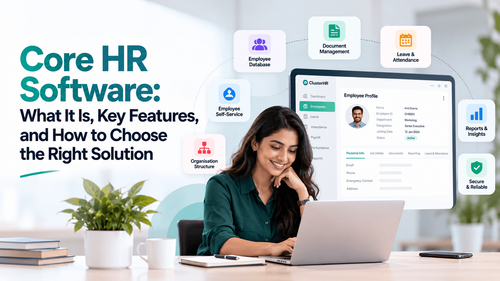
1. Centralised Employee Database
A centralised employee database is one of the most important features of Core HR software.
It allows businesses to maintain employee profiles containing relevant information such as personal details, job roles, department, joining date, employment status, and reporting structure.
Having this information in one place reduces dependence on separate spreadsheets and makes it easier to locate and update records.
2. Employee Document Management
Employee records often include appointment letters, identity documents, employment agreements, certificates, and other important paperwork.
A digital document management feature helps HR teams organise these files and retrieve them when required.
Businesses should check whether the software supports appropriate access permissions, secure storage, document updates, and retention requirements.
3. Employee Self-Service
HR teams frequently receive requests to update personal details, check leave balances, access documents, or view employment information.
An employee self-service portal allows employees to handle supported tasks themselves rather than contacting HR for every small request.
This can reduce repetitive queries and give employees greater visibility into their own information.
4. Organisation and Reporting Structure
As companies grow, reporting relationships and departmental structures can become more complex.
Core HR software can help maintain information about departments, designations, managers, and reporting relationships.
This gives HR teams and authorised managers a clearer understanding of how the organisation is structured.
5. Leave and Attendance Integration
Employee records are closely connected with everyday workforce management. Leave balances, attendance information, and working schedules may affect payroll and other HR processes.
When Core HR connects with leave and attendance management, businesses can reduce duplicate data entry and improve coordination between departments.
The exact level of integration varies by platform, so it is worth checking how information moves between modules.
6. Reporting and Employee Data Insights
HR data becomes more useful when businesses can turn it into meaningful information.
Reporting features can help teams review employee details, workforce distribution, and other available HR metrics.
Depending on the software, reports may also support workforce planning and help management understand organisational changes.
7. Data Security and Access Control
Employee records contain confidential information. Businesses need to ensure that only authorised individuals can access or modify sensitive data.
Look for role-based permissions, secure authentication, appropriate data protection measures, backup practices, and clear processes for handling employee information.
Security should be a key part of the selection process, not an afterthought.
Core HR Software vs Traditional HR Management
The difference between traditional HR management and Core HR software is not simply about using technology. It is about how employee information is organised and maintained.
With a traditional approach, records may be distributed across spreadsheets, email threads, physical files, and separate applications. HR teams often need to collect information manually before completing a task.
With Core HR software, essential employee information can be maintained in a centralised system. Related HR processes may also connect with this information, reducing repeated data entry and making records easier to manage.
However, software does not automatically eliminate every HR challenge. Businesses still need accurate data, clear workflows, suitable access permissions, and employees who understand how to use the system.
The best results come when the technology supports a well-defined HR process.
How to Choose the Right Core HR Software
Choosing HR software is an important decision because the system may become part of everyday business operations. Instead of selecting a platform based only on its number of features, evaluate how well it fits your organisation's actual needs.
1. Identify Your Current HR Challenges
Start by listing the problems you want to solve.
Are employee records difficult to maintain? Does your team spend too much time searching for documents? Are managers repeatedly requesting workforce information? Do employees depend on HR for routine updates?
Your answers will help you prioritise the features that matter most.
2. Check Whether It Can Scale With Your Business
The HR requirements of a 30-person company may differ from those of a 300-person organisation.
Choose a solution that can support your expected workforce growth without making everyday processes unnecessarily complicated.
Consider whether the platform can accommodate additional departments, locations, users, and HR requirements as the business expands.
3. Look for Connected HR Modules
A standalone employee database may be sufficient for some businesses. Others may benefit from a connected system that includes attendance, leave, payroll, recruitment, onboarding, and performance management.
Check which modules are included, which require additional purchases, and how they share information.
An integrated system can be especially useful when several HR processes depend on the same employee records.
4. Evaluate Ease of Use
Even a feature-rich platform can become a problem if employees and HR teams find it difficult to use.
Request a product demonstration and test common tasks, such as adding an employee, updating a profile, accessing documents, and generating a report.
The system should be practical for both HR professionals and employees who use self-service features.
5. Review Security and Support
Ask the provider how employee information is protected, how user permissions work, and what support is available when an issue occurs.
You should also understand data backup practices, data export options, implementation support, and the process for moving information if you change providers in the future.
6. Understand the Total Cost
The software subscription is only one part of the overall cost. Implementation, employee data migration, training, integrations, and additional modules may also affect your budget.
Compare pricing against the features you will actually use and the time your business expects to save.
A suitable solution should offer practical value, not simply the lowest initial price.
Common Mistakes to Avoid When Selecting Core HR Software
Businesses can make a few avoidable mistakes when evaluating HR systems.
Choosing based on price alone: A low-cost system may not include the features or support your business needs.
Ignoring employee experience: Complicated interfaces can discourage employees from using self-service tools.
Overlooking integration: Separate systems can continue creating duplicate work if they do not share information effectively.
Failing to plan data migration: Inaccurate or incomplete employee records can create problems after implementation.
Not checking security: Employee information requires appropriate safeguards and access controls.
Buying more features than necessary: Focus on current requirements and realistic future needs instead of paying for functionality your business may never use.
A clear understanding of your HR processes will help you make a more informed decision.
How ClusterHR Can Help Businesses Simplify HR Management
Managing employee information becomes more challenging as a business grows. ClusterHR helps businesses bring essential HR activities into a more connected digital environment.
With its Core HR capabilities, businesses can organise employee information and support more structured HR processes. Depending on the modules selected, organisations can also connect employee records with related activities such as attendance, leave management, payroll, onboarding, and employee self-service.
This connected approach can reduce the need to maintain separate records for different HR activities and help teams manage routine responsibilities more efficiently.
Businesses evaluating an HRMS should review how ClusterHR's features align with their current processes, workforce size, and future requirements.
Explore ClusterHR's Core HR software to learn more about its employee information management capabilities.
Conclusion
Core HR software is more than a digital employee database. It provides a structured way to manage employee information, maintain records, support everyday HR activities, and connect essential workforce processes.
For businesses still relying on spreadsheets and disconnected tools, moving to a centralised HR system can help reduce repetitive administrative work and improve access to reliable employee information.
The right solution depends on your organisation's size, current challenges, budget, security requirements, and plans for growth. Before making a decision, identify your priorities, compare relevant features, and test how easily the system fits into your daily operations.
If your business is ready to make HR management more organised and efficient, explore ClusterHR's Core HR software and see how it can support your team's needs as your organisation grows.