"Have we shortlisted the right candidates?"
"Has anyone scheduled the second interview?"
"Did we send the offer letter?"
These are common questions in almost every HR department. While they may seem like routine tasks, managing them manually often creates delays, confusion, and missed opportunities.
Recruitment is no longer just about posting a job and selecting candidates. Today's hiring process involves multiple stages, several stakeholders, and constant communication. Without a structured system, HR teams spend more time managing the process than actually finding the right people.
This is why more businesses are adopting Recruitment Management Software.
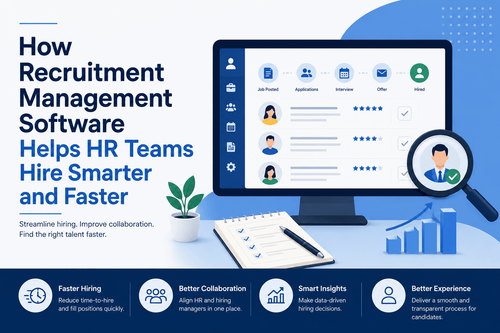
Instead of juggling spreadsheets, emails, WhatsApp messages, and multiple documents, HR teams can manage the entire hiring process from one platform. The result is faster hiring, better collaboration, and an improved experience for both recruiters and candidates.
Let's understand how recruitment management software helps HR teams hire smarter and faster.
Why Recruitment Has Become More Challenging
Hiring has changed significantly over the past few years.
Candidates expect quick responses, transparent communication, and a smooth recruitment experience. Businesses, on the other hand, want skilled professionals who can contribute from day one.
Balancing these expectations is not easy.
A single hiring process may involve:
- Receiving hundreds of applications
- Screening resumes
- Scheduling interviews
- Coordinating with department managers
- Collecting interview feedback
- Sending offer letters
- Completing onboarding documentation
Managing these activities manually increases the chances of delays and mistakes.
The longer the recruitment process takes, the greater the risk of losing qualified candidates.
What Is Recruitment Management Software?
Recruitment Management Software is a digital solution that helps HR teams manage the entire hiring process from a single platform.
Instead of relying on spreadsheets, emails, and disconnected tools, recruiters can organize every stage of hiring in one place.
A typical recruitment management system helps businesses:
- Publish job openings
- Manage candidate applications
- Track hiring stages
- Schedule interviews
- Store candidate information
- Generate recruitment reports
- Coordinate with hiring managers
The goal is simple.
Reduce manual work so HR teams can focus on selecting the best candidates.
Problems with Traditional Recruitment
Many organizations still manage recruitment using manual processes.
Applications arrive through email.
Candidate information is stored in Excel sheets.
Interview schedules are shared through phone calls or messaging apps.
Feedback comes from different departments in different formats.
While this approach may work for occasional hiring, it becomes difficult as recruitment volume increases.
Some common challenges include:
Delayed Hiring
Interview coordination often takes several days because of scheduling conflicts.
Lost Candidate Information
Important resumes or interview notes may get misplaced.
Poor Communication
Candidates often wait for updates, resulting in a poor hiring experience.
Duplicate Work
The same candidate information is entered multiple times into different systems.
Limited Visibility
Managers cannot easily track the status of open positions or recruitment progress.
How Recruitment Management Software Improves Hiring
Modern recruitment software solves these challenges by organizing every stage of recruitment.
Faster Candidate Screening
Instead of manually reviewing hundreds of resumes, recruiters can filter candidates based on predefined criteria.
This reduces the time required to identify suitable applicants.
Better Interview Coordination
Interview scheduling becomes easier because everyone works from the same platform.
HR teams, hiring managers, and candidates remain informed throughout the process.
Centralized Candidate Database
Every resume, interview note, and communication is stored in one location.
Recruiters no longer need to search through multiple email threads or spreadsheets.
Improved Collaboration
Hiring managers can review candidate profiles, provide feedback, and make decisions faster.
This reduces unnecessary delays.
Better Candidate Experience
Candidates appreciate quick responses and clear communication.
A structured recruitment process creates a positive impression of the organization.
Why Faster Hiring Matters
Many businesses underestimate the cost of delayed hiring.
Every vacant position affects productivity.
Existing employees often need to handle additional responsibilities until the role is filled.
Projects slow down.
Customer service may suffer.
Business growth becomes difficult.
Recruitment Management Software helps reduce the time required to move candidates through each hiring stage.
The faster businesses hire the right people, the sooner new employees begin contributing to business goals.
Recruitment Is Only the Beginning
Hiring someone is only the first step.
Once a candidate accepts the offer, several HR activities follow.
These include:
- Employee onboarding
- Attendance setup
- Leave management
- Payroll processing
- Employee records
- Performance management
If these activities are managed through different systems, HR teams continue facing operational challenges.
This is why businesses increasingly prefer integrated HR management platforms instead of standalone recruitment tools.
How Recruitment Management Software Supports Better Decision Making
Recruitment software provides valuable hiring insights.
Businesses can monitor:
- Time taken to fill positions
- Number of applications received
- Candidate conversion rates
- Recruitment pipeline
- Hiring trends
These reports help HR leaders improve future recruitment strategies.
Instead of relying on assumptions, decisions are based on real data.
Benefits for HR Teams
Recruitment software significantly improves day-to-day HR operations.
Saves Time
Automation reduces repetitive administrative work.
Improves Organization
Every recruitment activity is tracked from one dashboard.
Reduces Errors
Candidate information remains accurate and easily accessible.
Better Communication
HR teams and hiring managers stay aligned throughout the recruitment process.
Increased Productivity
Recruiters spend more time engaging with candidates and less time managing paperwork.
Benefits for Candidates
Recruitment is not only about HR efficiency.
Candidates also benefit from a structured hiring process.
They receive:
- Faster responses
- Better communication
- Clear interview schedules
- Professional recruitment experience
A positive candidate experience strengthens the employer brand.
When Should a Business Invest in Recruitment Management Software?
Many businesses wait until recruitment becomes difficult.
A better approach is to implement software before hiring volume increases.
Signs that indicate the need for recruitment software include:
- Frequent hiring
- Delayed recruitment
- Multiple open positions
- Growing workforce
- Difficulty tracking candidates
- Increasing administrative workload
The earlier businesses implement structured recruitment processes, the easier it becomes to scale.
Why Recruitment Software Works Better with an HR Management System
Recruitment does not end with an offer letter.
Employee information should move seamlessly into HR operations.
An integrated HR Management System allows businesses to continue the employee journey without duplicate data entry.
Recruitment flows naturally into:
- Employee onboarding
- Attendance management
- Leave management
- Payroll
- Employee self-service
- Performance management
This creates a connected HR ecosystem.
Why Growing Businesses Choose Integrated HR Solutions
Businesses today want simplicity.
Instead of purchasing separate software for recruitment, attendance, payroll, and employee records, they prefer one platform that manages the complete employee lifecycle.
This reduces complexity, improves efficiency, and provides better visibility across HR operations.
Conclusion
Recruitment has become more competitive than ever.
Businesses need faster hiring processes, better collaboration, and improved candidate experiences to attract the right talent.
Managing recruitment manually often results in delays, communication gaps, and unnecessary administrative work.
Recruitment Management Software simplifies every stage of hiring, from receiving applications to selecting the right candidate. It helps HR teams stay organized, improve productivity, and make better hiring decisions.
However, recruitment is only one part of employee management.
Once a candidate joins the organization, HR teams continue managing onboarding, attendance, payroll, leave, employee records, and performance.
This is where an integrated platform makes the biggest difference.
Simplify Hiring and HR Operations with ClusterHR
ClusterHR is a comprehensive HR Management System designed to help businesses manage the complete employee lifecycle from one platform.
Along with Recruitment Management, ClusterHR offers employee onboarding, attendance management, payroll management, leave management, employee self-service, performance management, and workforce management features.
Instead of using multiple disconnected tools, businesses can streamline hiring and everyday HR operations through a single, centralized platform.
Whether you are a growing startup or an established organization, ClusterHR helps HR teams hire smarter, manage employees efficiently, and build a more productive workforce.