"Can you check my salary slip? I think my attendance is incorrect."
"Why is my overtime missing this month?"
"I haven't received my reimbursement yet."
If these questions sound familiar, you're not alone.
For many businesses, payroll is one of the most critical processes in the organization. Employees expect to be paid accurately and on time. Businesses must ensure compliance with regulations, maintain employee trust, and manage payroll efficiently every month.
Yet payroll errors continue to affect companies of all sizes. A small mistake in salary calculations, attendance records, tax deductions, or reimbursements can create frustration among employees and increase administrative work for HR teams.
Many organizations underestimate the actual cost of payroll mistakes. They often focus on correcting the immediate issue without considering the time, resources, and business impact involved.
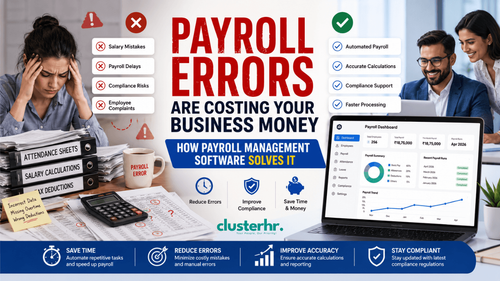
In reality, payroll errors can cost businesses thousands of rupees every year. They can reduce employee satisfaction, damage trust, and expose organizations to compliance risks.
The good news is that most payroll problems can be prevented with the right processes and technology.
This is where payroll management software plays an important role.
In this article, we will explore why payroll errors occur, how they affect businesses, and how payroll management software helps organizations improve accuracy, save time, and reduce costs.
What Are Payroll Errors?
Payroll errors refer to mistakes made during salary processing and employee compensation management.
These errors can occur at various stages of the payroll process, including attendance tracking, salary calculations, tax deductions, leave adjustments, and reimbursements.
Common payroll errors include:
- Incorrect salary calculations
- Wrong attendance records
- Missing overtime payments
- Incorrect tax deductions
- Delayed salary processing
- Duplicate payments
- Incorrect leave adjustments
- Missing employee benefits
While some mistakes may seem minor, even a small payroll error can create significant problems for employees and employers alike.
Why Payroll Accuracy Matters
Payroll is more than just processing salaries.
It directly impacts employee confidence, financial planning, compliance obligations, and business operations.
When payroll is handled accurately, employees feel valued and trust the organization. When mistakes become frequent, trust begins to decline.
Employees rely on their salaries for:
- Monthly expenses
- Loan payments
- Investments
- Family responsibilities
- Financial planning
A payroll mistake can disrupt all of these areas.
For businesses, payroll accuracy is equally important because it affects operational efficiency and legal compliance.
The Hidden Cost of Payroll Errors
Many business owners only look at the immediate cost of correcting payroll mistakes.
However, the actual impact is much larger.
Increased Administrative Work
Every payroll error creates additional work for HR and finance teams.
Teams must:
- Investigate the issue
- Verify records
- Correct calculations
- Communicate with employees
- Update payroll reports
What could have been a quick process becomes a time-consuming task.
Reduced Employee Trust
Employees expect payroll accuracy.
Repeated mistakes can create frustration and reduce confidence in the company's processes.
Over time, this can affect employee morale and engagement.
Compliance Risks
Payroll involves various compliance requirements.
Incorrect tax deductions, statutory contributions, or employee records can lead to penalties and legal complications.
Compliance errors often cost businesses much more than the original payroll mistake.
Productivity Loss
When HR teams spend excessive time correcting payroll issues, they have less time for strategic activities such as:
- Recruitment
- Employee development
- Performance management
- Employee engagement
This affects overall productivity across the organization.
Common Causes of Payroll Errors
Understanding the root causes of payroll mistakes is the first step toward preventing them.
Manual Data Entry
Manual entry increases the risk of human error.
A single incorrect number can impact salary calculations and payroll reports.
Attendance Mismatches
Inaccurate attendance records often lead to payroll discrepancies.
Missing attendance entries, incorrect shift records, and unapproved leaves can create payroll issues.
Poor Communication
Lack of coordination between HR, managers, and finance teams often results in incorrect employee information being used during payroll processing.
Complex Payroll Calculations
Organizations must account for:
- Basic salary
- Allowances
- Deductions
- Bonuses
- Overtime
- Reimbursements
- Taxes
Managing these calculations manually increases the likelihood of mistakes.
Compliance Updates
Payroll regulations change over time.
Businesses that fail to stay updated may unintentionally create compliance issues.
Manual Payroll vs Payroll Management Software
One of the biggest reasons payroll errors occur is the continued reliance on manual payroll processes.
Many organizations still use spreadsheets, email approvals, and separate attendance records to manage payroll.
While this approach may work for small teams initially, it becomes increasingly difficult as the workforce grows.
Manual Payroll Challenges
Manual payroll often involves:
- Spreadsheet calculations
- Multiple approval processes
- Attendance reconciliation
- Manual tax calculations
- Separate employee records
This creates several challenges:
- More opportunities for errors
- Longer processing time
- Limited visibility
- Higher administrative workload
- Increased compliance risk
Payroll Management Software Advantages
Payroll management software automates many of these processes.
It helps organizations:
- Calculate salaries automatically
- Track attendance accurately
- Manage leave records
- Generate payslips instantly
- Maintain compliance records
- Create payroll reports
As a result, businesses can significantly reduce payroll errors while improving efficiency.
The comparison is simple.
Manual payroll depends heavily on human effort.
Payroll management software reduces repetitive tasks and improves consistency.
How Payroll Management Software Prevents Payroll Errors
Payroll management software is designed to address the most common causes of payroll mistakes.
Let's examine how it works.
Automated Salary Calculations
Manual calculations can lead to incorrect salary figures.
Payroll software automatically calculates:
- Earnings
- Deductions
- Overtime
- Bonuses
- Taxes
This reduces the chances of human error.
Attendance Integration
Modern payroll software integrates attendance and leave records directly into payroll processing.
This eliminates the need for manual attendance verification.
Accurate attendance data leads to accurate salary calculations.
Leave Management Synchronization
Leave balances are automatically updated and reflected in payroll calculations.
This prevents common issues related to leave deductions and adjustments.
Tax and Compliance Support
Payroll software helps businesses maintain compliance with applicable regulations.
It can automate tax calculations and generate reports required for compliance purposes.
Digital Employee Records
Centralized employee data ensures that payroll calculations are based on accurate and updated information.
This eliminates confusion caused by scattered records and outdated spreadsheets.
Benefits of Payroll Management Software for Growing Businesses
Payroll management software offers several advantages beyond error reduction.
Time Savings
One of the biggest benefits is reduced processing time.
Tasks that once required hours or days can be completed much faster through automation.
Improved Accuracy
Automated calculations help reduce mistakes and improve payroll consistency.
Better Employee Experience
Employees receive:
- Accurate salary payments
- Digital payslips
- Faster issue resolution
- Greater transparency
This contributes to higher employee satisfaction.
Scalability
As businesses grow, payroll complexity increases.
Payroll management software helps organizations manage larger workforces without increasing administrative workload.
Better Reporting
Access to payroll reports enables better decision-making and workforce planning.
Managers can review payroll data quickly and accurately.
Signs Your Business Needs Payroll Management Software
Many organizations wait too long before adopting payroll software.
Here are some common warning signs.
Payroll Takes Too Long
If payroll processing requires several days every month, automation can improve efficiency.
Frequent Payroll Corrections
Regular payroll adjustments indicate underlying process issues.
Growing Workforce
More employees mean more payroll complexity.
Software helps manage growth effectively.
Compliance Concerns
If compliance management feels challenging, payroll software can simplify reporting and record keeping.
Employee Complaints
Frequent payroll-related queries often indicate inefficiencies in the existing process.
The Future of Payroll Management
Payroll expectations continue to evolve.
Employees expect transparency, self-service access, and timely salary processing.
Businesses need systems that support accuracy, compliance, and efficiency.
Manual payroll processes struggle to keep pace with these demands.
Organizations that embrace payroll automation can reduce administrative workload while improving employee satisfaction and operational performance.
As businesses continue to grow, payroll management software will become an increasingly important part of workforce management.
Conclusion
Payroll errors are more expensive than many businesses realize.
They consume valuable time, increase administrative work, create compliance risks, and affect employee trust.
While manual payroll processes may seem manageable initially, they often become difficult to maintain as organizations grow.
Payroll management software provides a practical solution by automating calculations, improving accuracy, integrating attendance data, and simplifying compliance management.
Businesses that invest in efficient payroll systems are better positioned to reduce errors, improve employee experience, and focus on growth rather than administrative challenges.
Simplify Payroll and Workforce Management with ClusterHR
ClusterHR helps businesses streamline payroll and workforce operations through a comprehensive HR and payroll management platform.
With features such as payroll management, employee attendance management, employee onboarding, employee self-service portals, leave management, performance management, and workforce management tools, ClusterHR enables organizations to manage their workforce from a single platform.
Whether you are a startup building your HR foundation or an established company looking to improve payroll efficiency, ClusterHR helps reduce manual work, improve accuracy, and create a better experience for both HR teams and employees.